From Civil Rights to Colorado Classrooms: The Enduring Legacy of Rev. Jesse Jackson
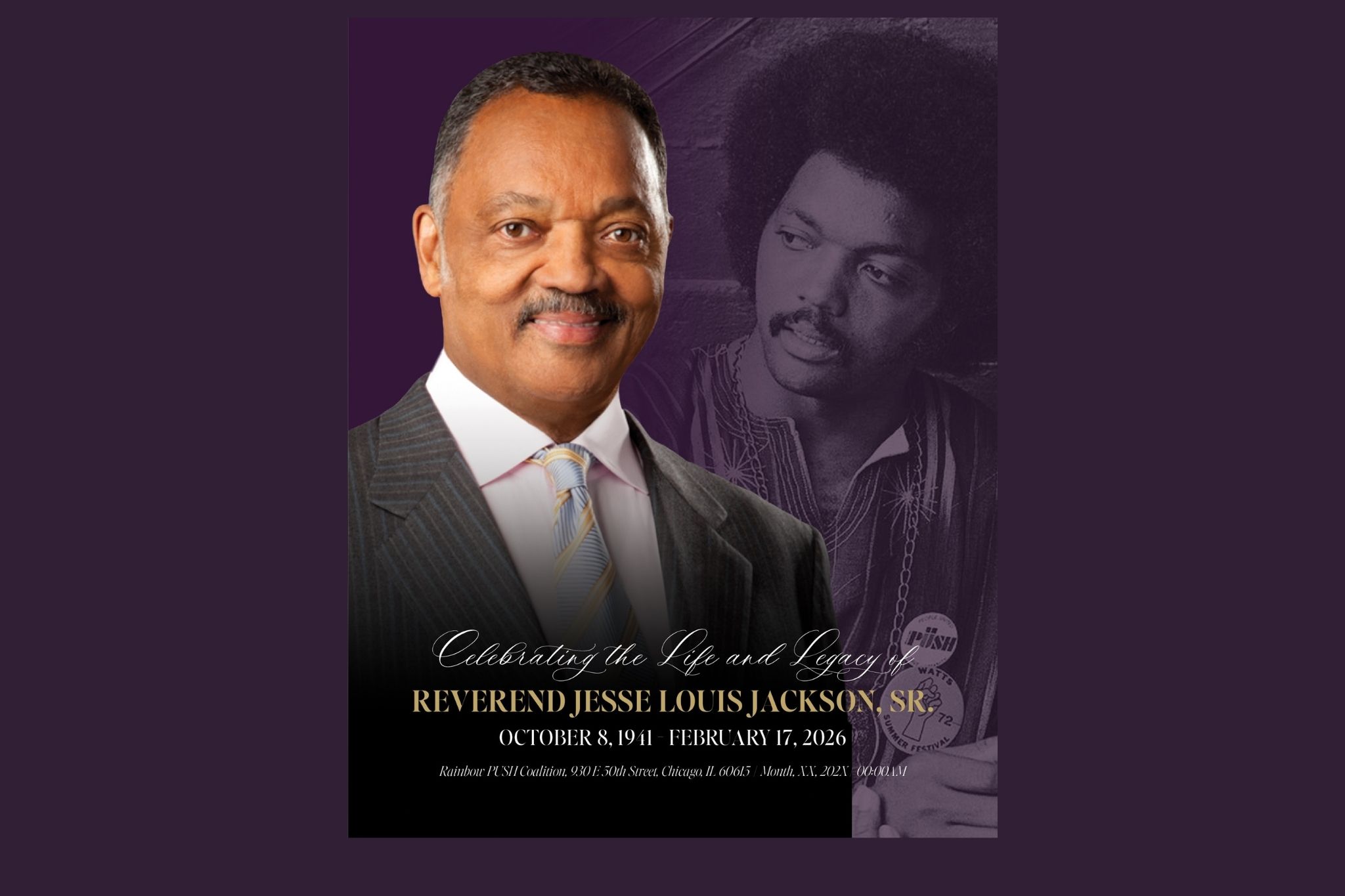
From Civil Rights to Colorado Classrooms: The Enduring Legacy of Rev. Jesse Jackson
Summary
From Civil Rights to Colorado Classrooms: The Enduring Legacy of Rev. Jesse Jackson
Rev. Jesse Louis Jackson Sr., civil rights leader, presidential candidate, and founder of the Rainbow/PUSH Coalition, died February 17, 2026, at the age of 84. Over more than six decades, Jackson galvanized Americans in the struggle for racial and economic justice, becoming one of the nation’s most enduring and recognizable voices for equality and hope. His influence reached across the country and into Colorado classrooms, where his message of empowerment and justice inspired generations of students and community leaders.
Jackson’s connection to Colorado was felt directly in Denver. On September 20, 2007, he visited Manual High School to speak out against racial injustice—part of his national advocacy on behalf of the Jena Six, a group of Black teenagers in Louisiana who faced severe criminal charges after a racially charged altercation at their high school. The Jena Six case became a national rallying point for civil rights leaders, highlighting persistent racial inequities in the justice system and drawing tens of thousands to protest in support of the students. Addressing a packed auditorium, Jackson urged Manual students to remain in school, register to vote, and work for equality in their own communities (Denver Post, Sept. 21, 2007).
As a young minister, Jackson worked alongside Dr. Martin Luther King Jr. through the Southern Christian Leadership Conference. After King’s assassination in 1968, Jackson carried the movement forward, building economic power alongside political protest. In Chicago, he led Operation Breadbasket and later founded PUSH, which grew into the Rainbow/PUSH Coalition — a platform for voter mobilization, corporate accountability, and community empowerment.
Over time, Jackson came to understand that civil rights had to include economic rights. His Wall Street Project, launched in 1996, pushed major corporations to diversify their boards and executive ranks, hire more minorities and women, invest in minority-owned businesses, and ensure fair access to capital. Through shareholder activism and direct negotiations, he held companies accountable for their treatment of underserved communities.
Similarly, his Detroit Automotive Project focused on opening doors within the powerful auto industry — increasing minority representation in executive roles and dealership ownership, expanding contracts for minority suppliers, and advocating for fair labor practices. These initiatives were among his most recent sustained efforts, reflecting his lifelong belief that equality must reach the boardroom as well as the ballot box.
Jackson’s influence also extended worldwide, as he played a key role in negotiating the release of hostages and prisoners in several high-profile situations. In January 1984, he secured the release of Navy Lt. Robert Goodman, an American pilot held in Syria. That June, Jackson traveled to Havana and negotiated with Fidel Castro for the release of 26 American and Cuban political prisoners. In December 1990, he persuaded Saddam Hussein to release more than 40 Americans held in Iraq. And in May 1999, during the Kosovo War, Jackson led a delegation to Yugoslavia and won the freedom of three U.S. soldiers captured by Yugoslav forces. These missions highlighted Jackson’s moral authority and humanitarian reach, bringing Americans home from some of the world’s most dangerous conflicts.
In 2024, after decades at the helm, Jackson stepped down as president of PUSH, closing a remarkable chapter of leadership while remaining a revered elder statesman of the movement.
Jackson also battled serious health challenges. In 2017, he publicly revealed that he had been diagnosed with Parkinson’s disease. Later, he was diagnosed with progressive supranuclear palsy (PSP), a rare neurological disorder, and in November 2025, he was hospitalized due to complications from PSP.
Even as his health declined, Jackson’s moral presence endured—a quality praised by fellow leaders. Among them was Andrew Young, who marched and organized beside Jackson throughout the civil rights movement. Congressman Danny Davis, who met Jackson in their 20s and later worked alongside him in Operation Breadbasket and PUSH, called him a “molder of thought” and a transformative figure, praising his extraordinary communication skills. Davis reflected that “there are those of us who feel that Barack Obama never would have become President of the United States of America had not it been for Jesse Jackson,” and described him, as Jackson would say, as “a public servant, not a perfect servant.”
Former President Barack Obama shared on social media: “Michelle and I were deeply saddened to hear about the passing of a true giant, the Reverend Jesse Jackson. We will always be grateful for Jesse's lifetime of service, and the friendship our families share. We stood on his shoulders.”
As a former mayor, congressman, ambassador, and fellow civil rights leader, Andrew Young observed, Jackson’s instinct to help defined his leadership and inspired trust. His optimism, rooted in the black church and belief in America’s promise, formed the heart of his political faith.
Jesse Louise Jackson’s impact is still felt today, from students here in Denver to leaders across the country. His fight for fairness and hope reminds us all to keep working for a better, more inclusive America.
