An ICE Shooting, Foreign Aggression, and the Making of a Chaotic America
An ICE Shooting, Foreign Aggression, and the Making of a Chaotic America
Summary
America no longer wakes up to news. It wakes up to damage reports, and the reports keep piling up faster than the country can absorb them.
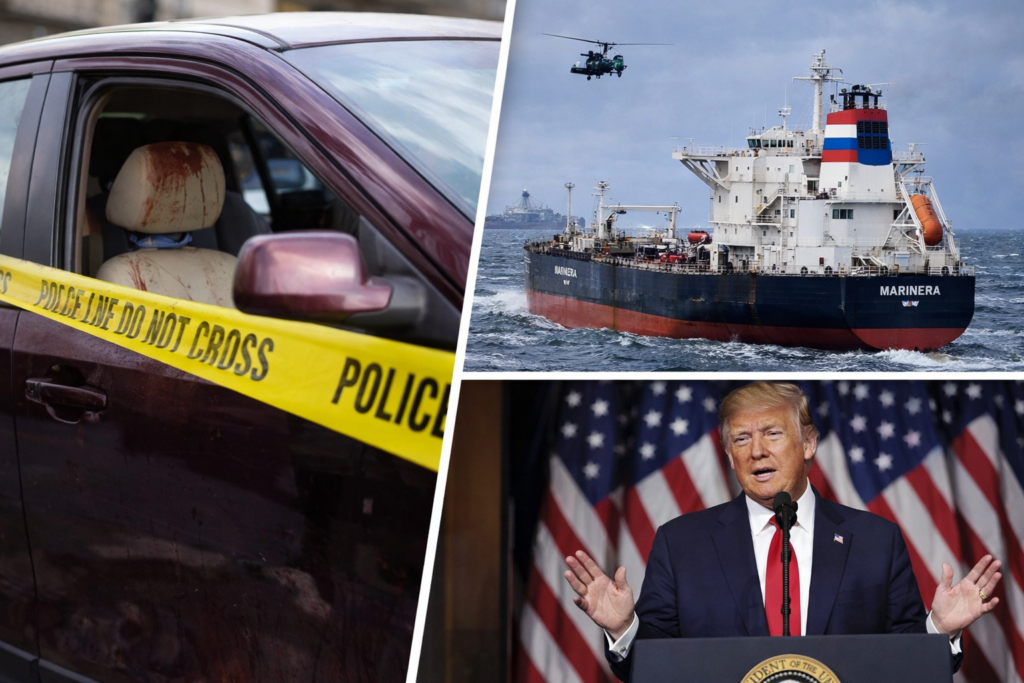
In south Minneapolis, a woman died after an Immigration and Customs Enforcement agent fired three shots into her vehicle during a street confrontation that played out in full view of cameras and bystanders. A video posted on social media shows several agents approaching a burgundy SUV in the middle of the street and ordering the driver to get out. When one agent grabs the driver’s side door handle, the vehicle reverses and then drives forward. An agent near the front of the SUV appears to draw his firearm and fire three shots. The SUV then crashes into a parked car and hits a light pole.
Federal officials said the agent fired in self-defense. ICE claimed officers were conducting targeted operations when “violent rioters” blocked them, and said the woman “weaponized her vehicle” and attempted to run over agents, calling it “an act of domestic terrorism.” The statement said an officer fired “defensive shots” and “used his training” to save lives.
Minneapolis officials say the story does not match what they saw.
Mayor Jacob Frey said local law enforcement had two priorities in the minutes that followed. First, get the victim to the hospital. Second, get ICE out of the area because the federal presence was “making a difficult situation more problematic,” Frey said.
“What they are doing is causing chaos and distrust,” Frey said. “They are ripping families apart, sowing chaos in the streets, and, in this case, quite literally killing people.” He called the federal explanation a “garbage narrative,” saying he had viewed video of the encounter.
Gov. Tim Walz also disputed the self-defense claim after reviewing the footage. In a social media post, Walz said he had seen the video and warned the public not to accept what he described as a propaganda machine, adding that the state would push for a full and fast investigation and accountability.
Minneapolis Police Chief Brian O’Hara said there was nothing to indicate the woman was the target of any law enforcement investigation. O’Hara said she appeared to be in her vehicle and blocked in the street because of the presence of federal law enforcement.
The shooting did not come out of nowhere. It came one day after the Department of Homeland Security announced what it called the largest DHS operation ever underway in Minnesota, saying about 2,000 law enforcement officers were being deployed to the Twin Cities, an escalation of an immigration crackdown that had started more than a month earlier. DHS officials pointed to arrests they said included violent offenders, while declining to detail the enforcement footprint for what they described as officer safety reasons.
That is the problem many city leaders and residents say they are living with: a vast federal operation that arrives like weather and leaves behind wreckage that local communities must clean up.
Then, as Minneapolis was still processing gunfire and grief, Washington’s posture abroad was telling a related story.
On Wednesday, the United States seized two oil tankers linked to Venezuela, including the Russian-flagged Marinera, formerly known as the Bella-1, in an operation that unfolded in the North Atlantic. The Marinera had evaded a U.S. blockade back in December, according to sources familiar with the operation. Those sources said the U.S. Coast Guard and other military assets carried out the seizure and that Russian military vessels were in the area as the situation developed. The Coast Guard had tracked the vessel for the last two weeks after attempting to seize it on Dec. 20, when the empty ship was in the Caribbean and apparently headed to Venezuela.
By Dec. 31, the Russian Maritime Register of Shipping listed the ship, renamed Marinera, as a Russian vessel. The crew had painted a Russian flag on the ship’s side. Russia’s Ministry of Transport condemned the seizure, saying U.S. forces boarded the vessel in international waters, then contact was lost.
“No state has the right to use force against vessels duly registered in the jurisdictions of other states,” the ministry said.
The administration’s defenders argue that this is how a government protects its interests, at home and abroad. Critics see a different pattern, one that begins with escalation and ends with harm, while official statements try to do what bullets and blockades already did.
In Washington, one of the most influential voices shaping that approach has described the world in terms that leave little room for restraint. Stephen Miller, the deputy chief of staff for policy and homeland security adviser, said the real world is “governed by strength” and “governed by force,” presenting power as the baseline rather than the last resort. Another account of his internal role described a daily pressure campaign across federal agencies, with demands for steep increases in immigration arrests and rapid expansion of deportation machinery.
This philosophy is not confined to the border. It shows up in American neighborhoods when federal agents conduct operations in traffic lanes, and it shows up in international waters when the Coast Guard boards a tanker as rival military vessels hover nearby. The scale changes, the language changes, but the underlying idea remains the same. Force first, explanation later. It also shows up in domestic policy, where instability becomes a feature rather than a failure.
As lawmakers again try and work toward a deal to extend Affordable Care Act subsidies that help millions afford coverage, families watch another high-wire negotiation that decides whether medical care remains accessible or slides further out of reach. The same government capable of seizing ships across the Atlantic and deploying thousands of agents into U.S. cities insists that health coverage still hinges on political bargaining.
In Minneapolis, the consequences were immediate and irreversible. A woman who city officials say was not a target of any investigation is dead after a confrontation with federal agents. The government says its agent feared for his life. The city says the agent acted recklessly and that ICE made an already volatile moment worse.
This is what national disorder looks like when it is dressed up as policy. It looks like competing press releases at the scene of a killing. It looks like armored vehicles on neighborhood streets. It looks like international seizures that invite diplomatic outrage. It looks like healthcare security that remains one vote away from collapse. It looks like a country trying to decide whether strength is supposed to protect life or simply prove who holds power.
Minneapolis Mayor Jacob Frey said the federal presence is making the city less safe and demanded ICE leave immediately.
“The narrative that this was done in self-defense is a garbage narrative,” Frey said.
