A Home for Healing: Cleo Parker Robinson Dance Unveils a New Era in Five Points
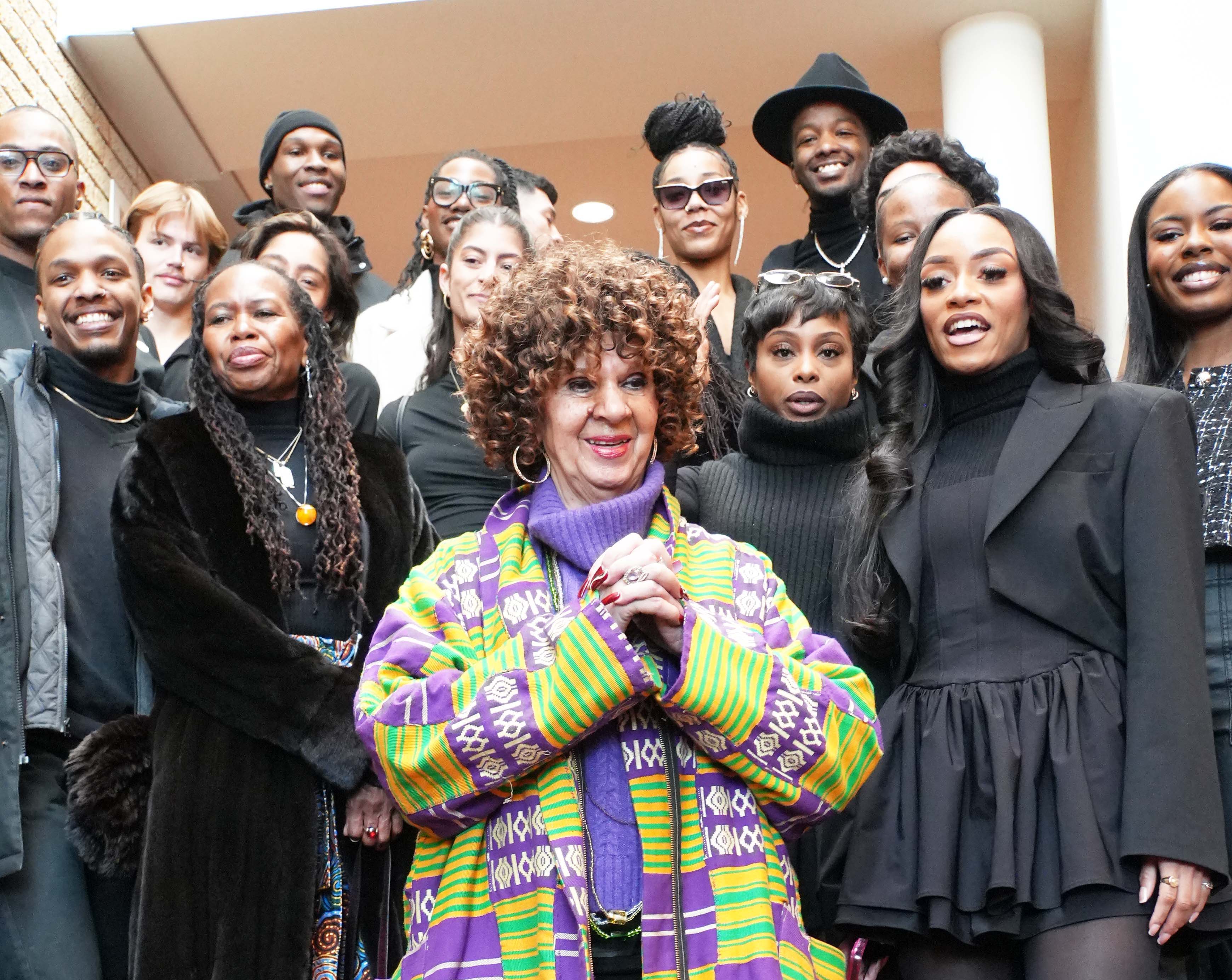
Cleo Parker Robinson with ensemble members and artistic directors on the grand staircase.
A Home for Healing: Cleo Parker Robinson Dance Unveils a New Era in Five Points
Summary
Just a few blocks from Denver’s historic Five Points neighborhood, the former Shorter AME Church—home to Cleo Parker Robinson Dance since 1988—has been revitalized with a bright, contemporary addition. A three-story atrium now links the historic structure to a new building, the Cleo Parker Robinson Center for the Healing Arts, seamlessly connecting past and present. This luminous space guides guests into a first-floor performance venue and gallery, while a grand staircase ascends to second-floor dance and exercise studios and continues to the third-floor administrative offices, boardroom, and business hub. The new facility officially opened on January 17 as part of a four-day community celebration, drawing over 200 people to the grand opening and inviting them to experience both the company’s rich legacy and its future vision.
Gwen Brewer, chair of the Cleo Parker Robinson Dance board, spoke with heartfelt gratitude about why the new wing matters. She emphasized opening doors so more children—especially from nearby neighborhoods—can access professional dance training for the first time. The expanded space means more inclusive programs, better rooms for dancers and teachers to do their best work, and a chance to reach students who were previously left out. She also reminded everyone that this success came from the support of many people, and those relationships must be nurtured to keep the work growing.
Cleo Parker Robinson, in her welcoming remarks, stood on the grand staircase, surrounded by members of the dance ensemble, creative directors, and others, and said in a joyful and welcoming tone that “the new wing isn’t just walls and rooms; it’s the living result of a lifetime of love, struggle, music, and community.”
“The site is very close to Five Points, we’re only down the street from where the neighborhood’s power and energy came from, she said and insisted the place [location of should be called Five Points even if some argue otherwise.” She tied the building’s proximity to the neighborhood’s cultural energy, saying “that energy traveled all the way down here,” and repeatedly rooted her work and memories in Five Points as the spiritual and cultural source for the company.
She told her story plainly: her black father and white mother who pushed through the Jim Crow era, a family that took each other in, nights filled with music. Those streets and that church, Shorter AME, gave her the spirit that built this work. She named the people who stood beside her: co-founders, teachers, board members, architects, donors, and the children who keep the work breathing. She made clear this was never just her alone. Cleo says the resilience that saw her ancestors endure segregation now fuels programs that inspire young dancers to find power in their steps, just as those who walked before them found strength in music and community.
Cleo Parker Robinson recalled growing up during Jim Crow with a focus on her parents’ mixed marriage and the ways that experience shaped her life and work. She credited her parents with teaching resilience, and determination, and a medicine-of-the-heart approach—lessons that informed how she built the school and community. Cleo wove those family hardships into broader themes: music and community uplift as survival tools, adopting and caring for siblings, and dance as a practice that teaches people “to get up,” stand still when needed, move with others, and keep going despite adversity.
Her message was simple and fierce: dance teaches you how to get up. It trains you to be steady, to move with others, to survive, and to thrive. Dance is schooling for the heart and for life — a way to build resilience, open doors, and lift whole neighborhoods. She asked the community to keep showing up: support the students, honor the past, and keep the art alive.
She also honored ancestors and culture — a “junkanoo queen” kind of reverence — and pointed to work that preserves that legacy, like documentaries and community rituals. In her voice was both history and hope: “This new wing is both a finish line and a starting line. It’s proof that steady faith, talent, and collective effort can turn dreams into a home.”
Warm, blunt, and full of soul, her closing plea was a call to action and celebration — “keep dancing, keep giving, keep believing. The new space is yours; now let’s fill it with life.”
